The true development of the department of La Guajira begins with a change in human attitude towards the management of local and global opportunities and challenges. We often mistakenly think that development occurs when economic and financial sectors intervene in a way that is disconnected from the territorial ecosystem.
From this perspective, it is necessary to restart the mental chip in terms of management and leadership capacity in public, private and community leadership, fostering cognitive skills and the ability to implement complex and systemic strategies to address long-term territorial problems.
This implies acting in the present with a futuristic vision built in a voluntaristic and flexible manner, exploring multiple paths and constantly monitoring the results, while strengthening the social and economic networks of the territory.
To think that development is achieved by applying the same procedures and practices, the result of inertias that follow a vectorial and tendential line of the past, is wrong. And I support it in the retrospective review of the behavior of the department in terms of the management of its wealth, bounties and potential, showing visible results such as monetary poverty and social inequality.
An attitudinal and visionary change, accompanied by scientific and technological knowledge, as well as a sustainable territorial planning and management process, constitute the first premise of modern development in a humanity in transition.
If this postulate is accepted, a constructive dialogue among all social actors should be pursued in order to envision, from the perspective of territories as complex systems, the conformation of an internal and external environment that gives life to an economic, political, social, cultural, environmental and technological structure.
This exercise of identifying variables in order to dynamize the territory, leads us now to the moment of implementing actions with all the actors of the territorial ecosystem called department, from a political-administrative perspective.
It is likely that after this reflection, some critics claim that there is no time for such a process and that, instead, immediate action is necessary because the needs of La Guajira cannot wait. Against these positions, the answer would be that the world is a system in constant change and that the events following the black swan of the COVID-19 pandemic are provoking geopolitical, economic, social and cultural transformations unprecedented in human history.
For this reason, it is imperative to implement radical changes in the way we conceive and manage development as a necessity for human life on Planet Earth.
It is also true that sometimes, in the role of leaders, we believe we have the solutions for the territory. In this sense, Some argue that tourism is the solution to our present and future economic and social problems; others are committed to agro-industrial transformation and still others to clean energies.
However, I dare say that all of these approaches, directed from a fragmented, segregated and extremely economic perspective, ignoring social problems such as opacity in public and private management, insecurity and organized crime, as well as the coercive power of multinational and transnational global actors that cohere the territorial system, are destined to fail.
Therefore, any development approached from the perspective of disaggregating the territorial ecosystem, using media strategies and traditional planning management, where decision making excludes the participation of stakeholders in the process of generating social value, would be insufficient.
What is needed instead is an articulated and coherent approach that links thought and action. This will allow the challenges and material and immaterial wealth to drive sustainable development based on the pillars of science, technology, innovation, and public and private management that fulfills the roles entrusted to it by society. through the institutional framework, placing its capacity at the service of the human being as the central axis of action.
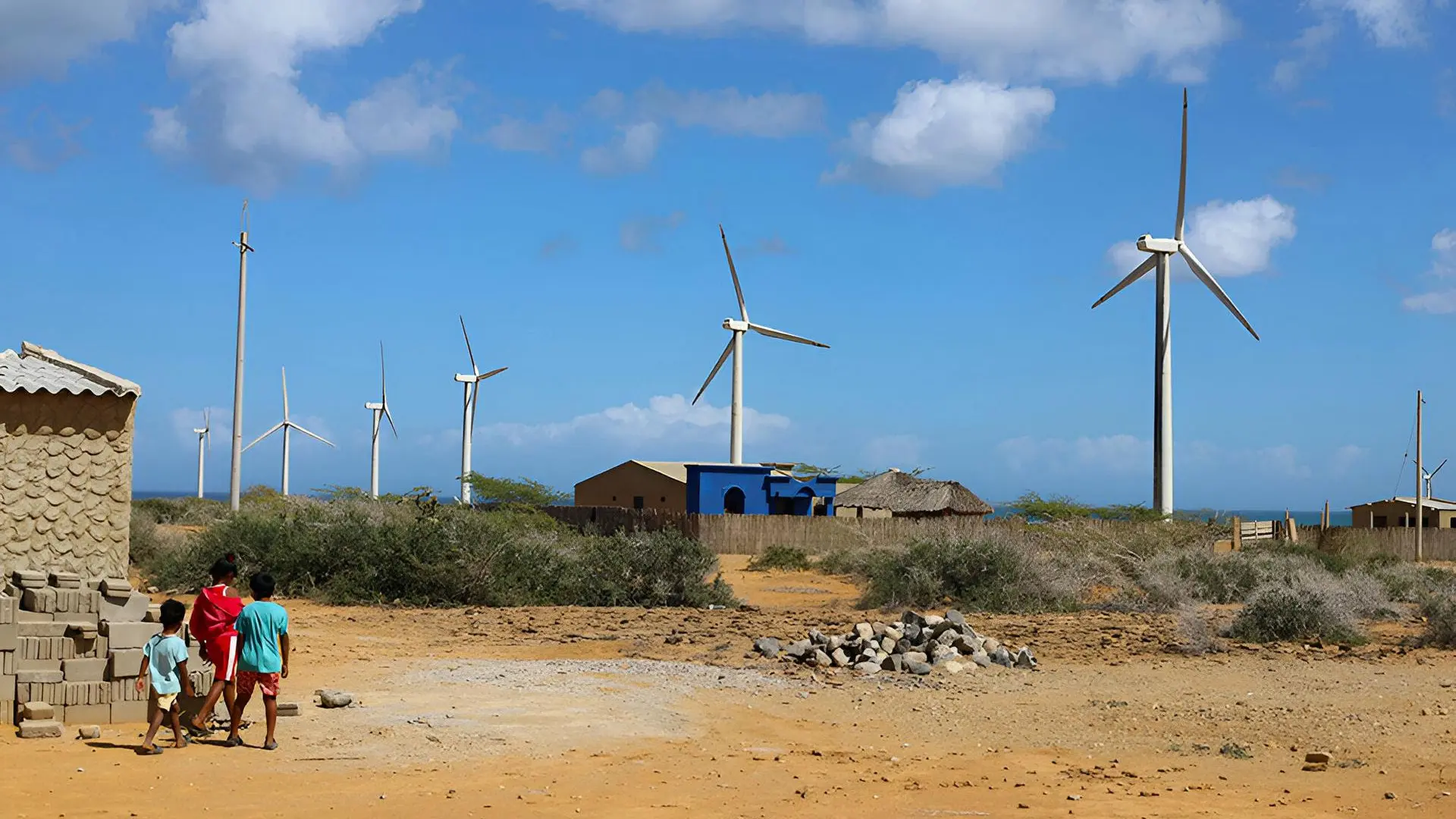
In conclusion, material wealth such as the geostrategic position of the territory, the kilometers of beaches, the wind and solar energy generation capacity, the extractive mining of fossil fuels, the diverse thermal floors and climates, the ancestral ethnic cultures, and the folklore for export. are useless if we fail to break down its true intrinsic value as a system, harnessing its energy through the interaction of its parts.
This capacity represents the real challenge of the modern leader: to mobilize social actors towards the achievement of strategic objectives of social and eco-sustainable benefit. This is the responsibility of the triad of government, the socio-productive sector and academia, under the principles of open government, inclusion, social and environmental responsibility, prospective and strategic vision of the territory, social dialogue, security and transparency.